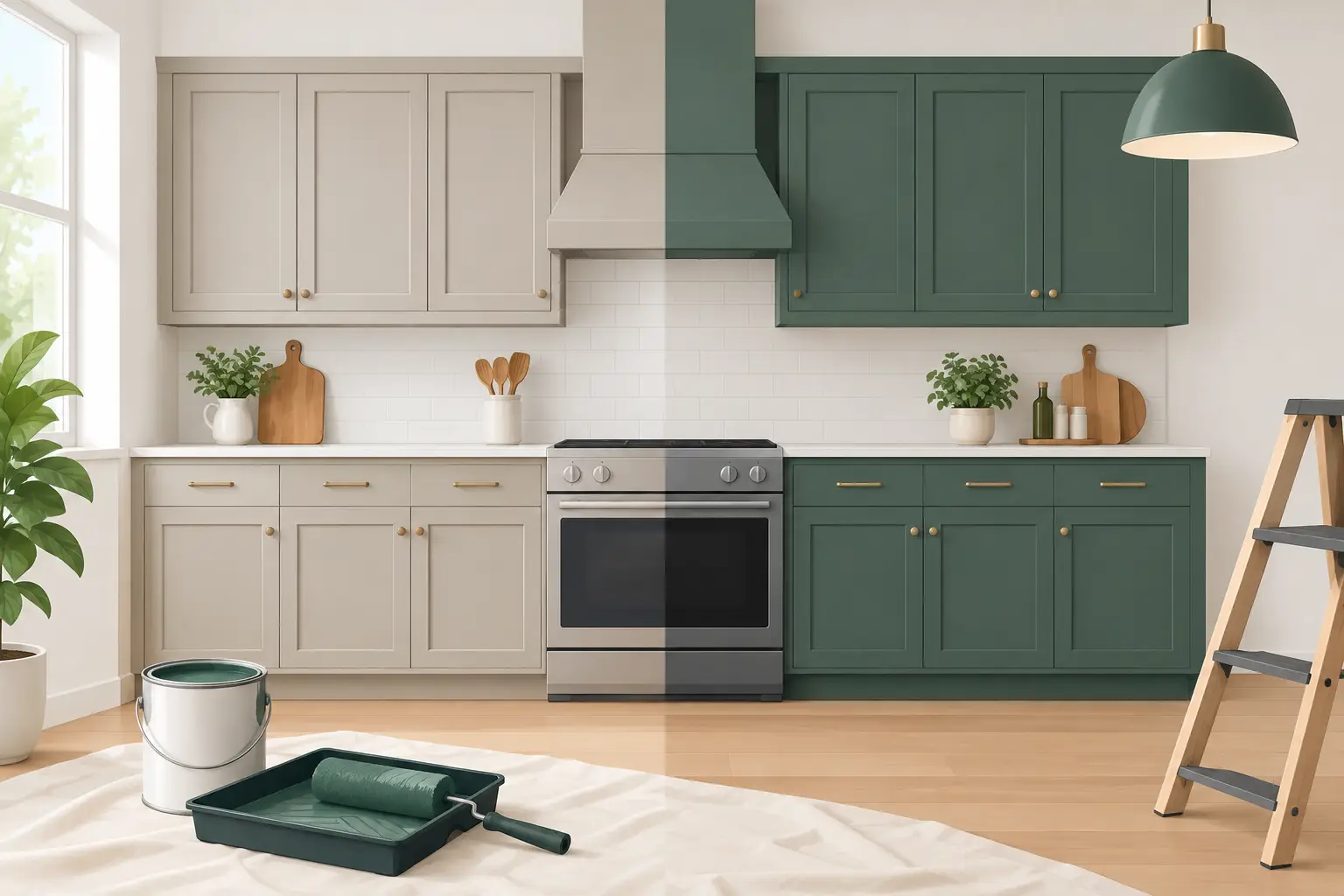
Cabinet paint rarely fails all at once. It starts at the sink base, around pulls, and along the lower edges of doors where daily use is hardest. Knowing when to repaint kitchen cabinets means looking past a tired color and judging whether the existing finish can still protect the cabinetry beneath it.
For a well-built kitchen, repainting can be a disciplined alternative to replacement. It can update the room, correct yellowing or wear, and bring inconsistent finishes back into line with the rest of the home. The result, however, depends less on the new color than on the condition of the substrate and the quality of the preparation underneath it.
When to Repaint Kitchen Cabinets: The Clear Signs
The most obvious reason to repaint is visible wear, but not all wear carries the same weight. Small scuffs in a low-contact area may only need a localized repair. Repeated chipping, peeling, swelling, or greasy discoloration usually indicates that the cabinet finish has reached the end of its useful life.
Painted cabinets should be considered for repainting when the finish no longer reads consistently across the kitchen. This may show up as dull drawer fronts beside shinier doors, yellowed white paint near cooking areas, or touch-ups that remain visible in daylight. In a kitchen with strong natural light, a patchwork of sheen levels and undertones is especially noticeable.
Wear around knobs and pulls is another reliable indicator. The repeated pressure of hands, rings, and cleaning products can thin a coating until the primer or bare substrate begins to show. Once the protective film is compromised, moisture and kitchen residue can work into exposed edges and create a larger repair issue.
Repainting is also appropriate when the cabinet color has become the limiting factor in an otherwise sound kitchen. A dated stain, a heavy espresso finish, or an overly warm cream can make quality stone, tile, and millwork feel disconnected. If the doors are structurally sound and the layout still works, repainting may deliver the visual change of a renovation without the disruption of full cabinet replacement.
Paint Failure Is Different From a Color Change
A color change is largely a design decision. Paint failure is a material and preparation problem. The distinction matters because it determines the scope of work required.
If the existing finish is intact, well-adhered, and free from moisture damage, it may be possible to clean, sand, prime as required, and apply a new cabinet-grade coating system. If paint is peeling from the doors, lifting at panel joints, or releasing in sheets near the sink, simply applying another coat will not solve the issue. The failed layers need to be removed or stabilized before refinishing can begin.
The same applies to cabinets that feel tacky or show deep impressions from everyday contact. Soft coatings can result from incompatible products, insufficient cure time, cooking grease left on the surface, or a finish that was never designed for cabinet use. A professional assessment should identify the cause before specifying the repair.
There is a trade-off here. Extensive coating failure can make cabinet repainting more labor-intensive than homeowners expect. In some cases, particularly with low-grade thermofoil doors that are delaminating or swollen particleboard cabinets, replacement may be the more durable decision. A careful contractor should say so rather than paint over a problem that will return.
Look Closely at Moisture-Prone Areas
Kitchen cabinets take their hardest abuse in a few predictable locations: below the sink, beside the dishwasher, around the range, and at the lower corners of base cabinets. These areas should guide the decision on whether repainting is cosmetic or corrective.
Under-sink doors can be affected by slow plumbing leaks that are easy to miss. Check for swollen edges, softened material, dark staining, or a musty odor inside the cabinet. Paint can improve the appearance of a sound door, but it cannot restore MDF or particleboard that has expanded from water exposure. That material may need repair or replacement before any finishing work is worthwhile.
Near the range, grease is the concern. Even cabinets that look clean can carry a thin film that prevents proper adhesion. Degreasing is not a casual wipe-down. It is a deliberate stage of cabinet preparation, followed by sanding and cleaning to create a stable surface for primer and finish coats.
Dishwasher steam can also affect adjacent panels and door edges. If paint is lifting only beside the dishwasher, inspect the appliance seal and ventilation before refinishing. Correcting the source of moisture is part of protecting the new finish.
The Best Time to Repaint Is Before Damage Spreads
There is a practical advantage to repainting before bare edges, swollen corners, or widespread paint loss appear. Early refinishing usually requires less repair work, preserves more of the original cabinet material, and produces a more consistent final finish.
Homeowners often wait until a kitchen feels fully outdated. That can be reasonable if the cabinetry remains stable, but it may mean living with a deteriorating coating for several more years. If the cabinets are already in good structural condition, repainting during a broader interior update can be more efficient. It allows the cabinet color to be coordinated with wall paint, flooring, counters, and hardware rather than treated as an isolated change.
For occupied homes, schedule matters as well. Cabinet refinishing involves removing doors and drawer fronts, preparing surfaces, masking the kitchen carefully, and allowing each coating stage to cure. A clean, controlled work area protects adjacent finishes and keeps household disruption manageable. The fastest approach is not always the best approach if it compromises cure time or surface preparation.
When Repainting Is Worth the Investment
Repainting is generally worth considering when the cabinet boxes and doors are well made, the hinges and drawer hardware function properly, and the layout still serves the household. Solid wood, quality veneer, and properly constructed MDF doors can often be refinished successfully when handled with the right system.
It is particularly effective in kitchens where the original cabinetry has good proportions but an outdated finish. Raised-panel doors, shaker profiles, and custom millwork may be expensive to replicate today. A factory-smooth painted result can modernize those elements while retaining the fit and construction quality already in place.
The process is less compelling when cabinets are poorly constructed, extensively water damaged, or no longer meet the household's storage and layout needs. Repainting does not add drawers, improve workflow, or fix sagging boxes. It is a finish solution, not a full kitchen redesign.
Why Preparation Determines How Long Cabinets Last
Cabinet painting is less forgiving than wall painting. Cabinet doors are touched constantly, exposed to oils and cleaners, and viewed at close range under changing light. Brush marks, dust, poor adhesion, and inconsistent sheen are difficult to hide in this setting.
A durable repaint begins with a complete inspection of the doors, drawer fronts, boxes, joints, and previous coatings. Hardware is removed, surfaces are cleaned and degreased, and damaged areas are repaired. Sanding creates an appropriate profile for adhesion while also leveling prior texture, drips, and uneven repairs. Primer selection must match the cabinet material and existing finish, particularly where stains, tannins, or old coatings could bleed through.
The finish coats should be applied as a complete system rather than selected solely for color. Cabinet-grade products need time to cure before they can withstand normal use. Rushing reinstallation or heavy cleaning can mark a finish that appears dry but has not yet developed its full hardness.
This is where foreman-led execution matters. A consistent result depends on controlling the details: labeled doors, clean masking, protected floors and counters, hand-cut lines where needed, and an organized sequence that keeps the kitchen usable as much as possible.
Choosing a Color That Will Hold Up Visually
A repaint is an opportunity to correct a dated color, but the most enduring choice is not always the brightest white or the darkest trend shade. Cabinet color needs to work with the fixed elements that are staying: countertops, backsplash, flooring, and the undertones of nearby trim.
Whites can shift dramatically between morning and evening. A white that looks crisp under one light source may read creamy, gray, or blue in another. Dark colors can bring definition to an island or lower cabinetry, but they also show dust, fingerprints, and edge wear more readily. Mid-tones and softened neutrals often provide a more forgiving balance in high-use family kitchens.
Sample boards should be viewed vertically and in the actual kitchen. Test them beside the backsplash, under task lighting, and near windows. This step is small, but it prevents expensive surprises once every door is coated.
A cabinet repaint should feel considered, not merely fresh. If the doors are sound, the surfaces are properly prepared, and the coating system is allowed to cure correctly, refinishing can extend the life of a kitchen while giving it a more deliberate, finished appearance. The right time is usually before visible failure becomes structural damage - when the cabinetry still deserves the level of care required to make it last.