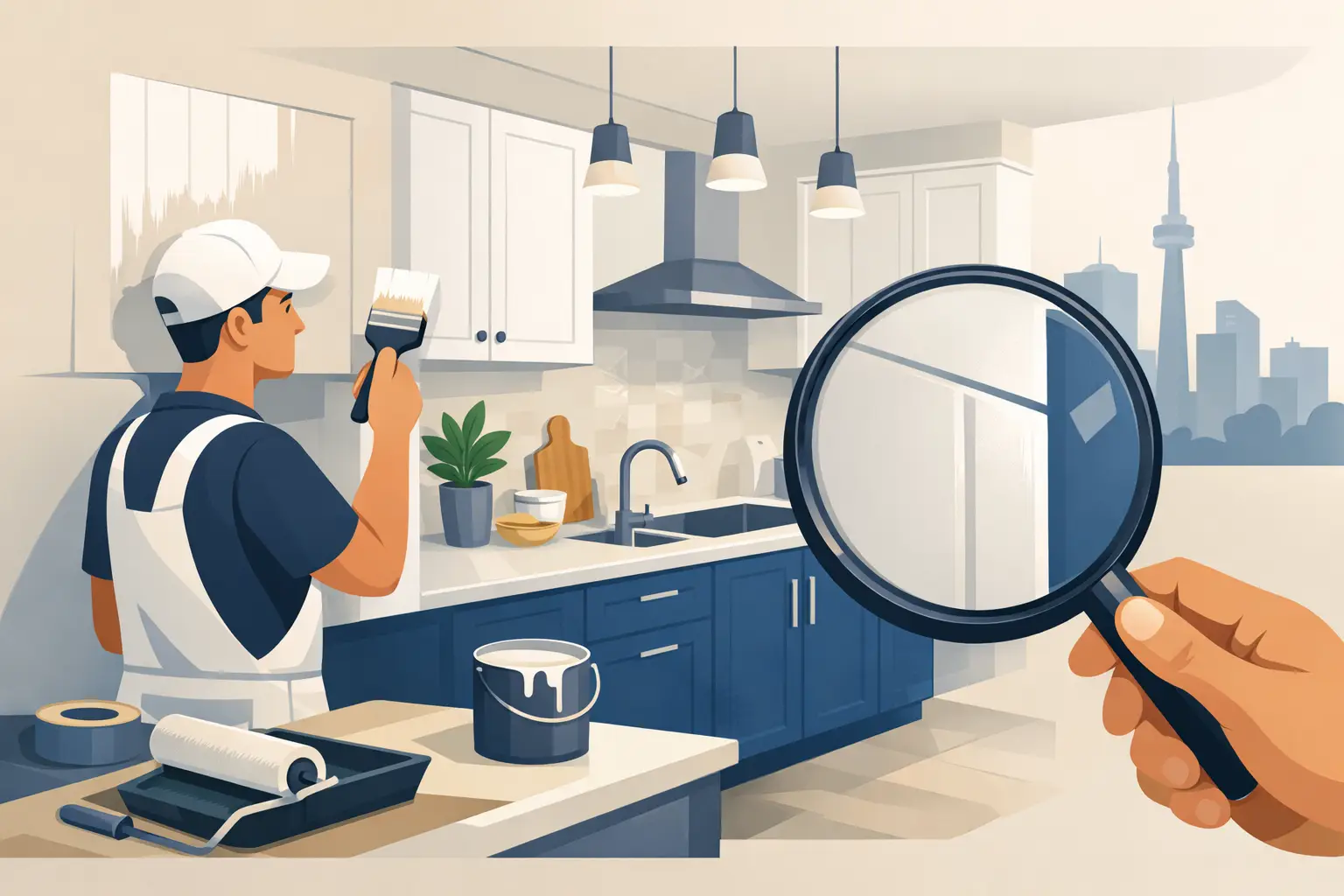
A kitchen can be spotless, well designed, and still feel tired if the cabinets carry the wear of ten hard years. In Toronto homes, that usually shows up as dull doors, chipped edges, yellowing clear coats, or a finish that changes tone from morning light to evening pot lights. Cabinet painting Toronto homeowners actually feel good about is not a quick cosmetic fix. It is a finish system, and the difference is visible every time the room is used.
Why cabinet painting in Toronto gets judged harshly
Cabinets sit at eye level, under direct lighting, in one of the most heavily used rooms in the house. That makes every shortcut obvious. Brush marks, dust in the finish, drips around profiles, uneven sheen, and weak adhesion all stand out faster on cabinetry than they do on walls.
Toronto homes add another layer of complexity. Many kitchens have a mix of old and new materials, custom millwork, site-built filler pieces, and past touch-ups that were never done with the right products. In older neighborhoods such as Rosedale, Leaside, and Forest Hill, you may also be dealing with wood movement, historic trim details, or cabinets that were refinished once before with inconsistent prep. A premium result depends on reading those conditions correctly before any coating is applied.
What separates premium cabinet painting Toronto projects from basic repainting
The first distinction is surface preparation. Cabinets are exposed to grease, hand oils, cleaning residues, and cooking moisture. Paint does not bond well over contamination, and no premium topcoat can compensate for weak prep underneath. Proper cleaning, deglossing or sanding, and substrate-specific priming are not optional steps. They are the foundation of durability.
The second distinction is process control. Cabinet painting should not be run like a general repaint where everything happens casually in place. Doors and drawer fronts usually need to be removed, labeled, and finished in a controlled sequence. Exposed frames and fixed panels need careful masking and hand-cut lines. Dry times, cure times, and recoat windows matter. If the schedule is rushed, the finish often pays for it later with sticking, imprinting, or premature wear.
The third distinction is finish quality. A strong cabinet finish should read consistently across flat fronts, profiles, end panels, and trim details. That means uniform sheen, balanced coverage, and a factory-smooth result without heavy build-up at corners or inside detail lines. Good cabinet painting feels refined because it looks intentional from every angle.
When painting cabinets makes sense - and when it does not
Painting is often the right decision when the cabinet boxes are solid, the layout still works, and the client wants a major visual upgrade without a full renovation. It is especially effective in kitchens where the existing millwork is better built than many replacement options available today. A well-executed refinishing process can preserve that quality while updating the look completely.
It does not make sense in every case. Cabinets with failing thermofoil, severe water damage, broken joinery, or low-grade surfaces that cannot be stabilized may be poor candidates. The same applies when the layout is fundamentally wrong or the homeowner wants a different door style rather than simply a new finish. A disciplined contractor should be willing to say that up front. Not every kitchen should be painted.
The materials and finishes matter more than most clients are told
Many cabinet failures start with the wrong product choice. Wall paint is not cabinet paint, and not every trim coating performs well on kitchen millwork. Cabinets need coatings designed for harder use, repeated cleaning, and tighter adhesion requirements.
That does not mean one product fits every project. Some kitchens need a system that prioritizes adhesion over previously coated surfaces. Others need stain-blocking performance because of tannin bleed or aged finishes. Dark colors may require a different build approach than light neutrals to avoid telegraphing defects. Sheen selection also matters. Too flat and the finish can feel chalky or mark too easily. Too glossy and every substrate flaw becomes more visible under direct lighting.
This is where trade discipline shows. Product selection should follow the material, the existing finish, the color target, and the expected wear. The goal is not simply coverage. The goal is a finish that cures properly, cleans well, and holds its appearance in real daily use.
Cabinet painting Toronto homes need with a livable process
Most homeowners are not only buying a finish. They are buying a jobsite experience. In occupied homes, that matters just as much as product choice.
A professional cabinet painting process should start with clear sequencing. What is coming off site or into a controlled spray setup, what is being finished in place, how long the kitchen will be partially disrupted, and when reinstallation happens should all be established before work begins. Labeling hardware, protecting adjacent surfaces, and maintaining a clean and livable jobsite are basic standards, not premium extras.
Scheduling discipline is equally important. Cabinet projects often affect the center of the home. Delays create immediate friction for the household, especially in busy family kitchens. Foreman-led execution helps here because decisions get made on site by someone who understands both the technical finish requirements and the practical constraints of the project.
Color selection is where good projects become excellent ones
Cabinet color is rarely just about trend. In Toronto kitchens, lighting conditions vary widely between narrow urban homes, rear additions, older houses with warmer finishes, and newer open-concept spaces with stronger natural light. A white that looks clean at noon can look flat under evening LEDs. A soft taupe may read warm and composed in one kitchen and muddy in another.
That is why cabinet color should be tested against counters, backsplash material, flooring, wall color, and the room's fixed lighting. The best results come from thinking in terms of the whole envelope rather than choosing a cabinet color in isolation. Premium painting work is partly technical and partly visual judgment.
Consistency matters just as much as the shade itself. When cabinets are sprayed or finished properly, the color should read evenly across doors, drawer fronts, filler strips, and exposed ends. That consistency is part of what makes the room feel expensive, even if the cabinetry itself is not new.
Common shortcuts that lead to callbacks
Most cabinet problems can be traced back to a short list of avoidable mistakes. Inadequate cleaning is one. So is skipping the correct primer because the existing surface "looked fine." Poor dust control shows up immediately in dark finishes and still causes problems in lighter ones. Rushed reinstallation can damage edges before the coating has fully cured.
Another issue is unrealistic pricing tied to an unrealistic process. If a quote does not allow for proper prep, controlled application, drying time, and careful reassembly, the finish quality will usually reflect that. Cabinet painting is labor-intensive for a reason. The time is in the details.
What to look for when hiring a cabinet painting contractor in Toronto
A serious contractor should be able to explain the process in plain terms. That includes prep, priming, product selection, application method, protection of the home, and expected curing behavior after installation. If those answers stay vague, the project usually will too.
It also helps to look for signs of operational reliability, not just finish claims. Full insurance, WSIB coverage, dependable scheduling, and one point of contact all reduce risk. Cabinet work demands coordination and accountability because the margin for error is tight.
For homeowners, the best contractor is often the one who sounds the least casual about the work. For builders and designers, the same principle applies. Clean sequencing, trade-ready scheduling, and foreman-led execution are not marketing lines. They are how high-visibility finishes stay consistent across a project.
Whitmore Painting approaches cabinet refinishing this way because cabinetry rewards discipline and exposes improvisation.
Why this work still pays off
A properly painted kitchen can change how the entire main floor feels without the cost, waste, and disruption of full replacement. It updates the room, sharpens the architecture, and brings older millwork back into alignment with the rest of the home. But only when the finish is built to last.
That is the real standard for cabinet painting Toronto homeowners should expect: meticulous prep, controlled execution, and a finish that still looks composed after daily use has had time to test it. If the work is done well, the cabinets stop looking repainted and start looking right.