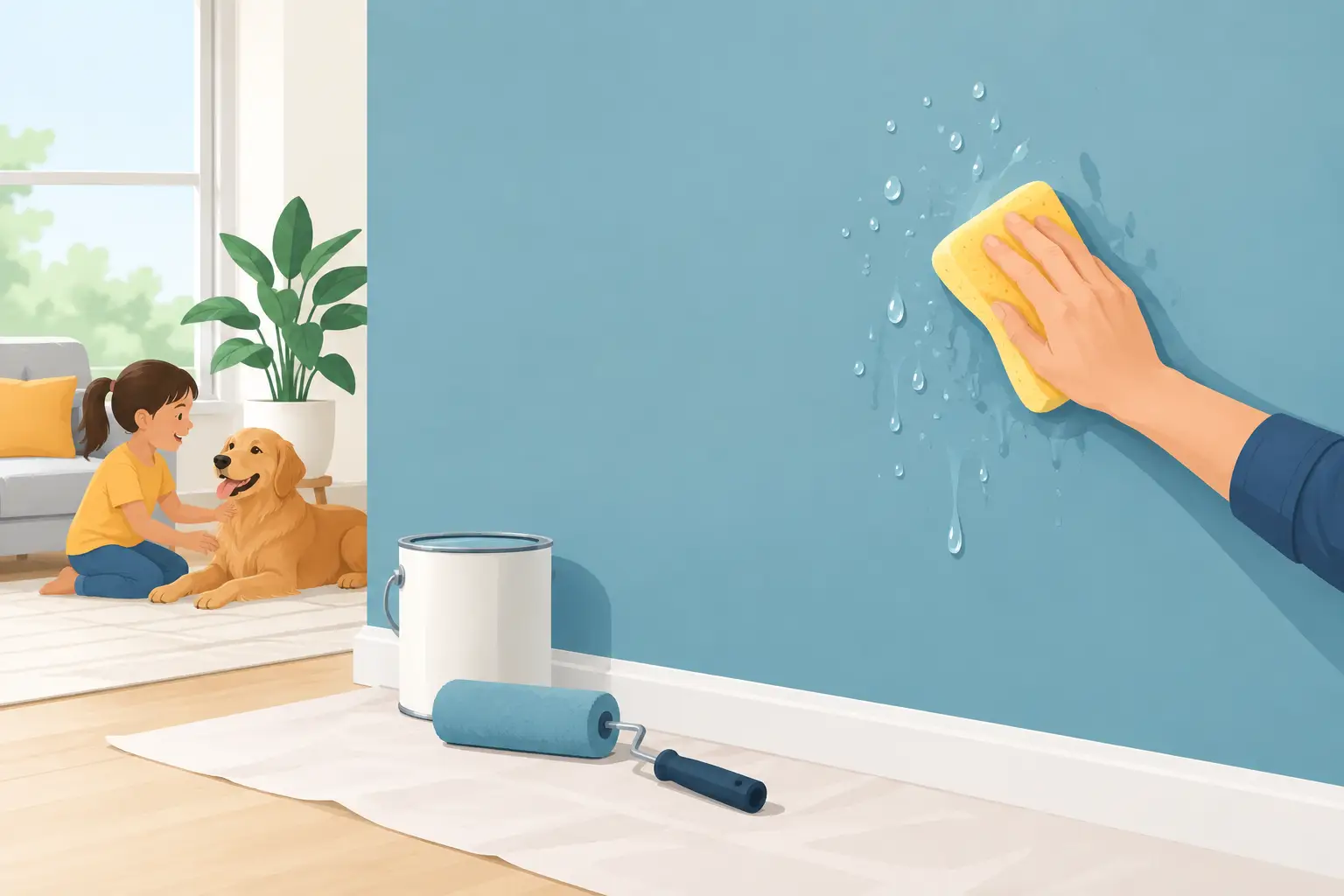
A freshly painted hallway can look impeccable on completion day and tired six months later if the coating was chosen for appearance alone. Washable wall paints are designed for the realities of occupied homes: fingerprints around switches, scuffs beside entry doors, marks from chair backs, and the occasional spill in a busy kitchen. But washability is not a single product feature. It is the result of the right paint system, sheen, preparation, application, and curing time.
For homeowners investing in a refined interior, the goal is not simply a wall that can be wiped down. It is a finish that cleans without developing shiny patches, burnishing, visible lap marks, or uneven color under changing daylight and evening lighting.
What washable wall paints actually do
Washable interior paints use higher-performing binders that form a tougher, more coherent paint film than standard contractor-grade coatings. Once properly cured, that film is better able to release common household soils when cleaned with water and a mild detergent. Better formulations also resist burnishing, which is the unwanted gloss change that can appear after rubbing a flat or matte wall.
This distinction matters. A paint can be marketed as washable yet still show a polished spot when repeatedly scrubbed, particularly in deep colors or very low sheens. A premium washable coating is intended to retain a more consistent visual finish after routine cleaning, not to make walls indestructible.
There are limits. Sharp impacts, grease left in place for extended periods, permanent marker, dye transfer, and repeated abrasive scrubbing can damage nearly any painted surface. Paint protects and finishes a wall; it does not turn drywall into a hard commercial panel.
Where washable paint earns its cost
Washable paint is most valuable in rooms where people regularly touch, pass, or work near the walls. Entry halls, mudrooms, stairwells, kitchens, family rooms, children's bedrooms, and corridors generally benefit from a higher-performance interior coating. In these spaces, cleanability protects both the finish and the interval between repainting.
A dining room used mainly for entertaining may not receive the same daily wear. Even then, selecting a washable matte paint can be worthwhile when the room has strong natural light or dark, saturated walls. A high-quality formula provides more flexibility when a mark needs attention before guests arrive.
For landlords, builders, and multi-unit project teams, washable finishes can reduce touch-up work at turnover. The specification still needs to suit the project budget and intended use. A high-traffic corridor and a low-use guest room should not necessarily receive the same coating system.
Sheen affects both appearance and cleanability
Sheen is often treated as a simple design preference. In practice, it directly affects how a wall reads and how it performs. Higher sheens traditionally offer greater resistance to moisture and cleaning, but they also reflect more light and expose more surface irregularities.
A flat finish has minimal reflectivity and can create a calm, architectural appearance, especially on broad walls and ceilings. Conventional flat paint is usually less forgiving of cleaning. Premium washable flats and mattes have improved this substantially, but a homeowner should still expect a gentler cleaning approach than they would use on a satin finish.
Matte is often the strongest choice for formal living areas, bedrooms, dining rooms, and well-prepared hallways. It gives walls a soft, even look while allowing for routine spot cleaning. Eggshell provides a subtle increase in durability and is well suited to active family rooms, kitchens, and circulation spaces where a touch more sheen is acceptable.
Satin is generally reserved for areas that receive frequent contact or moisture, such as mudrooms, laundry rooms, trim-adjacent walls, and some kitchens. It is easier to clean, but its reflectivity can make drywall patches, roller texture, and imperfect sanding more noticeable. The right answer depends on the condition of the substrate, the room's light, and the expected use of the space.
Preparation determines whether the finish holds up
No premium paint can correct a poorly prepared surface. Walls must be cleaned before painting, especially near cooking areas, switch plates, radiators, and entry points where oils and airborne residue collect. Paint applied over contamination may adhere initially but can fail prematurely or clean unevenly later.
Meticulous prep also includes repairing dents and cracks, feather-sanding patches, sealing stains where necessary, and spot-priming exposed compound or repairs. These steps create a uniform surface for the finish coats. Without them, repaired areas can flash differently under light, absorb paint unevenly, or reveal an unwanted texture after cleaning.
A professional crew should also assess the existing coating. Walls previously painted with a lower-grade flat paint, old calcimine, or an unknown finish may require additional preparation or a bonding primer. This is not unnecessary process. It is how the new coating achieves reliable adhesion and a consistent appearance.
Application quality is visible long after the crew leaves
Washable paint still needs to be applied at the correct spread rate and maintained at a wet edge. Under-application can compromise coverage and film build. Overworking the paint can create roller marks, uneven texture, or weak areas in the finish. These issues become more apparent in homes with large windows, pot lights, and directional light washing across the walls.
Hand-cut lines, careful masking where appropriate, and controlled rolling technique matter most around ceilings, millwork, and feature walls. They also make future maintenance easier. When a room is painted cleanly from the start, small repairs and touch-ups can be localized instead of turning into a full repaint.
Color selection deserves the same discipline. Deep navy, charcoal, black, and richly saturated colors can be striking, but they are less forgiving of scuffs and touch-ups than soft neutrals. A washable formula helps, yet it cannot eliminate the visual sensitivity of a dark wall. In these cases, keeping labeled leftover paint from the same batch is sensible, and any touch-up should be tested in an inconspicuous area first.
Cure time matters more than most homeowners expect
Paint may feel dry within hours, but it does not reach full performance immediately. The coating needs time to cure as water and other components leave the film and the binder develops its final strength. During this period, aggressive cleaning can leave marks or damage the surface even when the product is rated washable.
Follow the manufacturer's guidance for the specific coating and the conditions in the home. Cooler temperatures, limited airflow, and high humidity can extend curing. As a practical rule, avoid scrubbing newly painted walls for at least several weeks unless the product instructions state otherwise.
When cleaning is appropriate, start with the least aggressive method: a soft microfiber cloth dampened with clean water. If needed, use a small amount of mild dish soap, then wipe again with clean water and gently blot dry. Avoid abrasive pads, strong degreasers, magic-eraser-type abrasives, and repeated circular scrubbing. Those methods can alter the sheen of even a durable paint film.
Choosing a paint system for a polished interior
The best washable paint is not automatically the most expensive can on the shelf. It is the coating that fits the room, surface condition, color, sheen, and maintenance expectations. For most premium residential interiors, a high-quality washable matte or eggshell from an established paint manufacturer offers the right balance of visual restraint and day-to-day durability.
Before work begins, the painter should identify high-contact zones, review the lighting, confirm the desired sheen, and explain where a slightly higher sheen may be practical. This discussion is especially useful in open-concept homes, where one color may run through several rooms with different levels of traffic and natural light.
Whitmore Painting approaches this decision as part of the finish specification, not as an afterthought at the paint store. The objective is a coating system that looks composed on completion day and remains manageable in a lived-in home.
A washable wall should never look like it was selected solely for durability. When surface preparation, product selection, and controlled application are handled properly, it can retain the quiet, even finish that makes a well-painted room feel complete - even after real life leaves its mark.