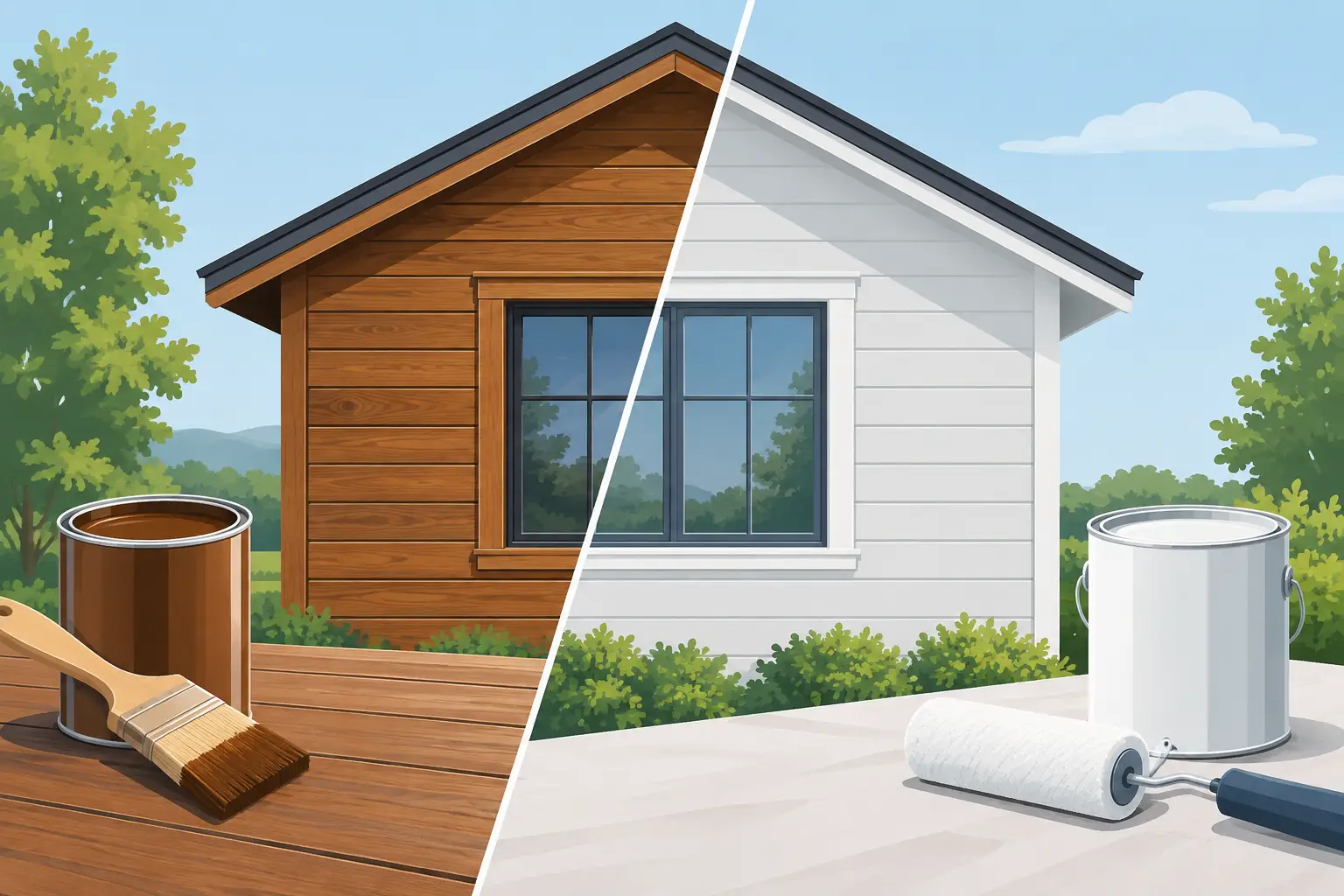
A peeling front porch or faded cedar siding usually does not point to a bad product alone. It points to a finish that was mismatched to the surface, moisture conditions, or maintenance expectations. The decision between stain versus exterior paint affects how a home weathers, how often it needs attention, and whether the finish looks refined five years from now or begins failing at the first vulnerable edges.
For homeowners planning a premium exterior project, the right answer is rarely universal. Paint and stain protect differently. Each requires a distinct preparation process, and each is better suited to certain materials and exposures. A disciplined assessment of the substrate comes before selecting a color card.
Stain Versus Exterior Paint: The Core Difference
Exterior paint forms a protective film over the surface. On properly prepared wood, fiber cement, masonry, and trim, that film delivers strong color consistency and a clean, opaque appearance. It can cover old stains, varied boards, repaired areas, and visual imperfections that would otherwise remain visible.
Stain is designed to penetrate wood or, in the case of solid-color stain, bond more closely with the wood surface than traditional paint. Transparent and semi-transparent stains allow grain and natural variation to show through. Solid-color stains provide more coverage but retain a softer, less film-heavy appearance than paint.
That distinction shapes how the finishes age. Paint commonly fails by cracking, blistering, or peeling when moisture gets behind the coating or adhesion is compromised. Stain tends to fade and wear away gradually, particularly on horizontal surfaces. Neither failure mode is desirable, but gradual wear can make maintenance more straightforward because it may require cleaning and recoating rather than extensive scraping.
When Exterior Paint Is the Better Choice
Paint is generally the right specification for exterior trim, doors, shutters, fascia, soffits, and architectural details where crisp color and uniformity matter. It is also well suited to fiber-cement siding, properly primed engineered wood, and previously painted surfaces that are in stable condition.
On a traditional home in neighborhoods such as Forest Hill, Leaside, or Lawrence Park, painted trim often provides the visual discipline the architecture requires. Hand-cut lines around windows, consistent sheen across fascia, and a clean contrast between siding and trim are difficult to achieve with a penetrating stain system.
Paint can also be the practical choice when wood siding has uneven coloration, patches, filled knots, or previous coating failures. An opaque coating creates visual continuity across the elevation. This is particularly valuable where repairs have been made over time and the goal is a unified exterior rather than a rustic wood character.
Paint Demands Meticulous Prep
The strength of a painted finish depends on what sits beneath it. Loose paint must be removed, failing edges feather-sanded, bare areas spot-primed, and gaps addressed with the appropriate exterior sealant. Surfaces need to be clean, dry, and sound before topcoats are applied.
Skipping these steps produces a familiar result: paint that looks acceptable on completion day but begins lifting at end grains, window sills, horizontal ledges, and trim joints after a season of weather. Premium coating systems help, but they cannot compensate for trapped moisture, chalky surfaces, or weak underlying layers.
Paint also requires close attention to moisture movement. Older wood siding and trim expand and contract with changing temperatures and humidity. If the assembly is retaining water because of failed caulking, poor flashing, leaking gutters, or unsealed end grain, repainting alone is not a lasting repair. The moisture source needs to be corrected first.
When Stain Is the Better Choice
Stain is often the stronger choice for cedar siding, wood cladding, fences, pergolas, and other exterior wood features where the grain is part of the design. A transparent or semi-transparent stain can preserve the material’s character while providing water repellency and UV protection.
For a newer cedar feature wall or a well-maintained wood-sided home, stain offers an appearance that paint cannot replicate. It lets the natural variation remain visible rather than covering the substrate under a uniform film. The result can feel more architectural and less manufactured, provided the boards are in good condition and the client accepts that variation is part of the finish.
Solid-color stain occupies a useful middle ground. It offers more UV resistance and color consistency than a semi-transparent system while remaining more forgiving than paint on certain wood substrates. It can be a practical option for weathered siding or fences where a fully opaque painted look is not desired.
Stain Is Not a Shortcut
A common assumption is that stain requires less preparation than paint. In reality, stain is less forgiving of surface inconsistency. Old coatings need to be identified. Mill glaze may need to be removed. Graying wood, mildew, dirt, and failed stain need proper cleaning and sanding before a new system is applied.
Transparent stain, especially, will not hide blotchy repairs, water marks, dark knots, or unevenly weathered boards. If the wood has been patched extensively or has significant color variation, a stain sample on the actual surface is essential. What looks balanced on a small swatch can look uneven across a full elevation.
Stain performance also depends heavily on exposure. South- and west-facing facades receive more intense ultraviolet light, while shaded areas may remain damp longer and develop mildew. A deck or railing can wear much faster than vertical siding because horizontal surfaces hold water and receive direct foot traffic. Those areas should be treated as separate maintenance zones, even when the color is intended to match.
Consider the Surface Before the Finish
The material should lead the decision. Fiber cement and composite trim are typically paint systems. Brick, stucco, and masonry require coatings designed for their level of porosity and vapor movement. Metal railings and doors require appropriate cleaning, abrasion, and primers before paint is applied.
Natural wood offers the widest range of options, but it also calls for the most judgment. Cedar and redwood are often excellent candidates for stain. Painted pine trim can perform well when it is properly primed, sealed, and maintained. Pressure-treated lumber needs sufficient drying time before either stain or paint, and its high moisture content can undermine adhesion if coated too soon.
Previously coated surfaces narrow the choices. Applying stain over an existing paint film will not create a true stained-wood appearance. In many cases, returning painted siding to a stain-ready condition would require full stripping, extensive sanding, and an honest assessment of what the wood looks like underneath. That process may be justified on a distinctive heritage detail, but it is not always the sensible investment.
Maintenance: Recoat Cycles Matter More Than Labels
There is no responsible way to promise one fixed lifespan for every exterior coating. Exposure, substrate condition, color depth, roof overhangs, landscaping, drainage, and maintenance all influence performance. Dark colors can absorb more heat. Areas near sprinklers, dense vegetation, or snow accumulation may weather differently from the rest of the house.
Painted trim may hold its appearance for years, then require localized attention at the most exposed edges. Stained siding may need a maintenance coat sooner on the sun-facing elevation while protected areas remain in good condition. A good exterior plan anticipates this rather than waiting for widespread failure.
The best time to maintain either system is before peeling, severe fading, or water damage develops. Annual visual checks around windows, doors, gutters, deck boards, and lower trim can identify small problems while repairs remain controlled. Keeping vegetation back from siding and ensuring gutters drain correctly protects the coating investment as much as the product selection does.
Color and Finish Expectations
Paint offers the widest range of opaque colors and sheen levels. It is the better choice when a client wants an exact architectural color, a high-contrast trim package, or a factory-smooth result on a front door. Low-luster and satin finishes are commonly selected for exterior surfaces because they balance washability, appearance, and the ability to mask minor surface texture.
Stain colors are influenced by the wood beneath them. Even solid stains can read differently across boards, especially on aged lumber. That is not a defect when the goal is a natural finish, but it should be understood before work begins. For transparent and semi-transparent systems, test areas are part of proper specification, not an optional extra.
The same principle applies to sheen. A highly reflective paint can emphasize uneven siding, patched repairs, and imperfect trim profiles. A premium finish is not simply the glossiest finish. It is the finish that suits the substrate and looks consistent in direct sun, shade, and changing seasonal light.
A Better Decision Starts With an On-Site Assessment
Choosing between stain and paint from photos alone is risky. The existing coating, moisture condition, wood species, previous repairs, and sun exposure need to be evaluated in person. This is where a foreman-led approach matters: the person assessing the work should understand how the preparation plan will translate into application and long-term performance.
Whitmore Painting approaches exterior work as a coating system, not a quick color change. That means identifying weak areas, specifying compatible primers and topcoats, protecting landscaping and surrounding finishes, and organizing the work around weather conditions and access. Clean job sites and dependable scheduling matter, but the finish still begins with the substrate.
If you are drawn to natural wood, choose stain when the material is worth seeing and you are prepared for periodic maintenance. If your priorities are uniform color, sharper detailing, and coverage over repairs or varied boards, exterior paint is usually the stronger solution. The most valuable next step is not choosing a product at the hardware store. It is understanding what your exterior is asking for before the first surface is sanded.