A freshly painted wall can look excellent at noon and reveal lap marks, dry spray, or uneven sheen when the lights come on at night. That is why spraying versus rolling is not simply a question of speed. The right application method affects surface texture, paint build, masking requirements, cleanup, and the consistency of the finished color across a room or exterior.
For premium residential work, the answer is rarely one method for the entire project. Professional painters select the method based on the substrate, the coating, the condition of the site, and the finish standard expected in the space.
Spraying versus rolling: the practical difference
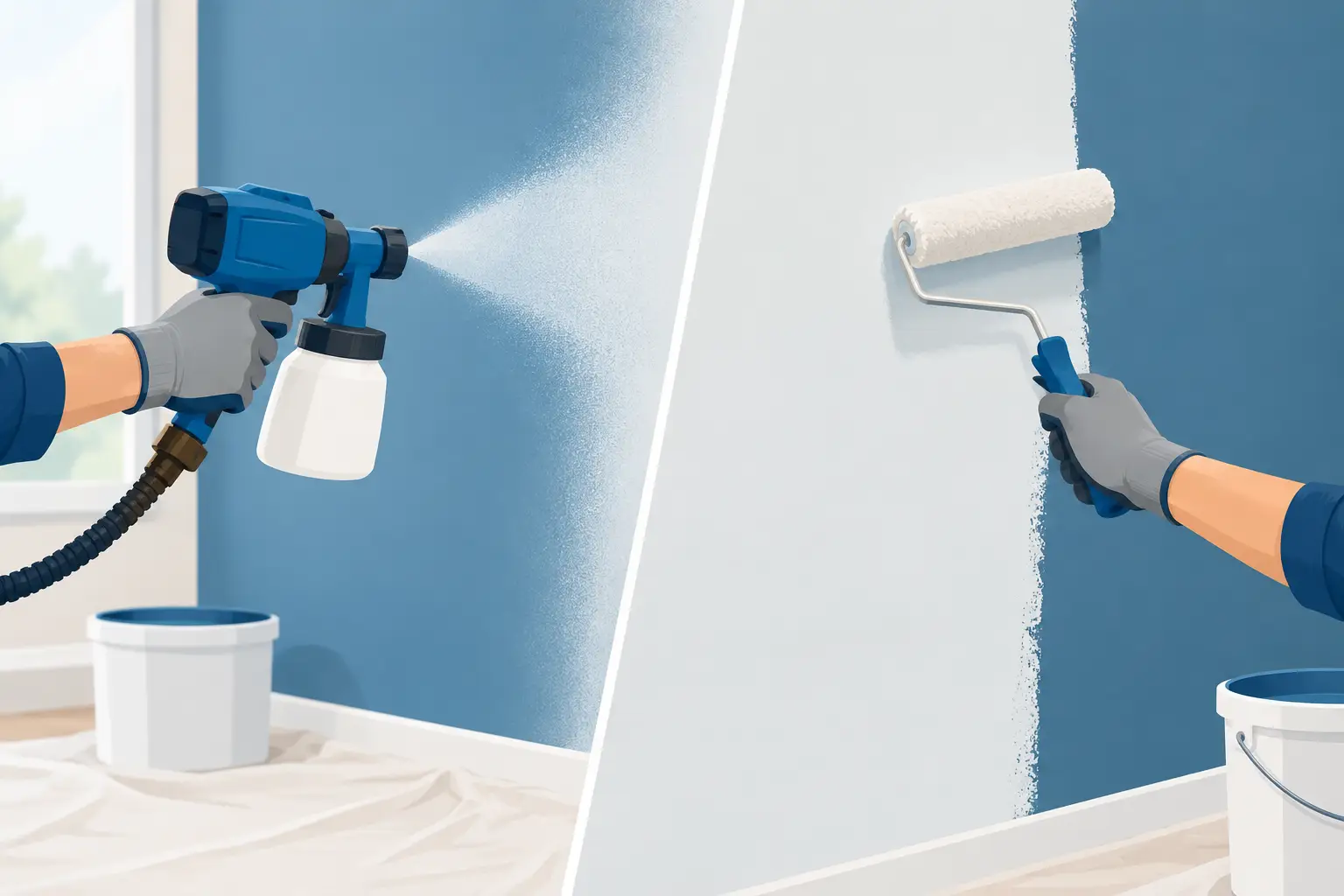
Spraying atomizes paint into a fine, even mist and applies it quickly across broad surfaces. Rolling transfers paint directly from a roller cover to the wall, ceiling, or siding. Both can produce a high-quality finish when the surface is properly prepared and the painter understands the coating being used.
The difference is most visible in texture. A roller leaves a light, uniform stipple that is standard on many painted drywall walls and ceilings. A sprayer can create a flatter-looking surface with less visible texture, particularly when the coating is applied correctly and the substrate has been sanded and primed to the same standard.
Speed is also different, but it is often misunderstood. A sprayer applies material much faster than a roller. It does not necessarily make the full project faster. Rooms must be masked carefully, floors protected, fixtures covered, and adjacent finished surfaces sealed off from overspray. In a furnished home, that preparation can take longer than the spray application itself.
When rolling is the better choice
Rolling is often the most efficient and controlled method for occupied interiors. It allows painters to work room by room with limited masking, keep the job site orderly, and maintain access to areas of the home as work progresses. For a repaint of standard drywall walls, a properly selected roller cover and a consistent application technique produce an even, durable finish.
Rolling is especially well suited to walls that already have a roller texture. Spraying one repaired section beside rolled walls can leave a visible difference in texture, even when the color and sheen match. When blending repairs or repainting only part of a room, matching the existing application method is usually the sounder decision.
A roller also helps work paint into minor wall texture. On previously painted plaster, lightly textured drywall, or masonry surfaces, that physical contact can improve coverage and reduce the risk of thin areas. The key is maintaining a wet edge and applying enough material to achieve proper coverage without creating heavy roller lines or flashing.
Rolling does have limits. Large open ceilings, stairwells, and extensive new drywall can take significantly longer by roller alone. Roller application can also leave a texture that is not appropriate for fine cabinetry, trim, doors, or other surfaces where a factory-smooth result is the goal.
Where spraying delivers a better finish
Spraying is the preferred method when a smooth, consistent coating is required across a large number of detailed surfaces. Cabinet doors, trim packages, interior doors, shutters, railings, and new-construction millwork are common examples. With meticulous prep, the right tip size, controlled pressure, and compatible coatings, spraying lays down an even film without brush marks or roller stipple.
For cabinet refinishing, spraying is generally essential. Doors and drawer fronts are removed, labeled, cleaned, degreased, sanded, primed as needed, and sprayed in a controlled setup. The visible finish is only part of the work. Proper curing time and careful handling determine whether that finish holds up to daily use.
On exterior projects, spraying can be highly effective for siding, soffits, fences, and broad masonry surfaces. It moves efficiently across repetitive areas and reaches profiles that would be slow to brush or roll. However, exterior spraying requires disciplined weather planning. Wind can carry overspray onto windows, roofing, neighboring properties, landscaping, and vehicles. A responsible crew does not spray simply because it is faster.
New construction is another strong use case. Before flooring, finished hardware, and furnishings are installed, an empty home can be masked and sprayed efficiently. Walls and ceilings may be sprayed and back rolled to create even coverage while retaining the appropriate wall texture. Trim, doors, and built-ins can then receive a finer spray finish once surrounding surfaces are protected.
Why back rolling matters
Spraying and rolling are often used together rather than treated as competing methods. Back rolling means spraying a section and immediately rolling it while the paint remains wet. This distributes the coating evenly, works paint into the surface, and leaves a uniform roller texture.
This approach is particularly effective on new drywall, porous surfaces, stucco, concrete block, and exterior siding. It can reduce holidays - thin or missed areas that show through in certain lighting - while providing the production speed of spraying. It also helps ensure paint is applied at the manufacturer’s recommended spread rate rather than stretched too thin for appearance or speed.
On walls and ceilings, back rolling is often the best balance between efficiency and finish consistency. It is not required on every project, but it is a valuable standard where coverage, adhesion, and a uniform final appearance matter.
The hidden factor: preparation and containment
Neither method corrects poor surface preparation. Spraying will not hide unsanded patchwork, dents, raised drywall seams, or inconsistent primer. In fact, a smooth sprayed finish can make defects more apparent because it reflects light evenly across the surface.
Rolling is equally dependent on prep. A roller can catch on loose paint, leave lint in poorly prepared surfaces, and expose repairs when primer, sanding, and spot treatment have been rushed. Before either method begins, walls should be repaired, sanded, dust-controlled, primed where needed, and inspected under appropriate lighting.
Containment is equally important when spraying inside an occupied home. Every opening, floor area, fixture, vent, countertop, and finished surface within the spray zone must be protected. Air movement must be controlled. Painters need a clear plan for entry, exit, drying, and daily cleanup. A clean spray job is not defined only by the painted surface. It is defined by the absence of paint where it does not belong.
Choosing the right method by surface
For standard interior walls, rolling is usually the practical choice, with spraying and back rolling reserved for larger vacant areas or full-scale renovations. Ceilings may be sprayed and back rolled for speed and consistency, especially in open layouts.
For baseboards, casings, crown molding, doors, and built-ins, spraying typically provides the cleanest result when the space can be properly contained. In an occupied room where masking would be excessive, careful brush and mini-roller work may be more appropriate. Hand-cut lines remain essential either way. A sprayer cannot replace the control required at transitions, corners, and edges.
For cabinets, a sprayed finish is the professional standard. For exterior siding, the decision depends on wind conditions, architectural detail, accessibility, and the need to protect surrounding property. Spray and back roll is frequently the right approach, while brush and roller work may be safer around detailed trim, tight lot lines, and sensitive landscaping.
Cost, schedule, and the finish you can expect
Spraying can carry higher labor costs on a furnished interior because of masking, containment, equipment setup, and cleanup. It may lower costs on large empty spaces where production efficiency is meaningful. Rolling generally involves less setup, but it can require more application time across expansive surfaces.
The right comparison is not the hourly speed of a spray gun against a roller. It is the complete scope: prep, protection, application, drying, touch-ups, cleanup, and final inspection. A rushed spray job can create expensive overspray and correction work. A rushed rolling job can create flashing, lap marks, and inconsistent texture.
For homeowners, the most useful question is not, “Do you spray or roll?” Ask how the painter will prepare the surfaces, protect the home, achieve consistent sheen, and inspect the finish in both natural and artificial light. Those details determine whether the result looks deliberate after the crew leaves.
A well-managed painting project uses spraying where it improves the finish and rolling where it provides better control. The method should serve the surface, the home, and the expected standard of work - never the other way around.