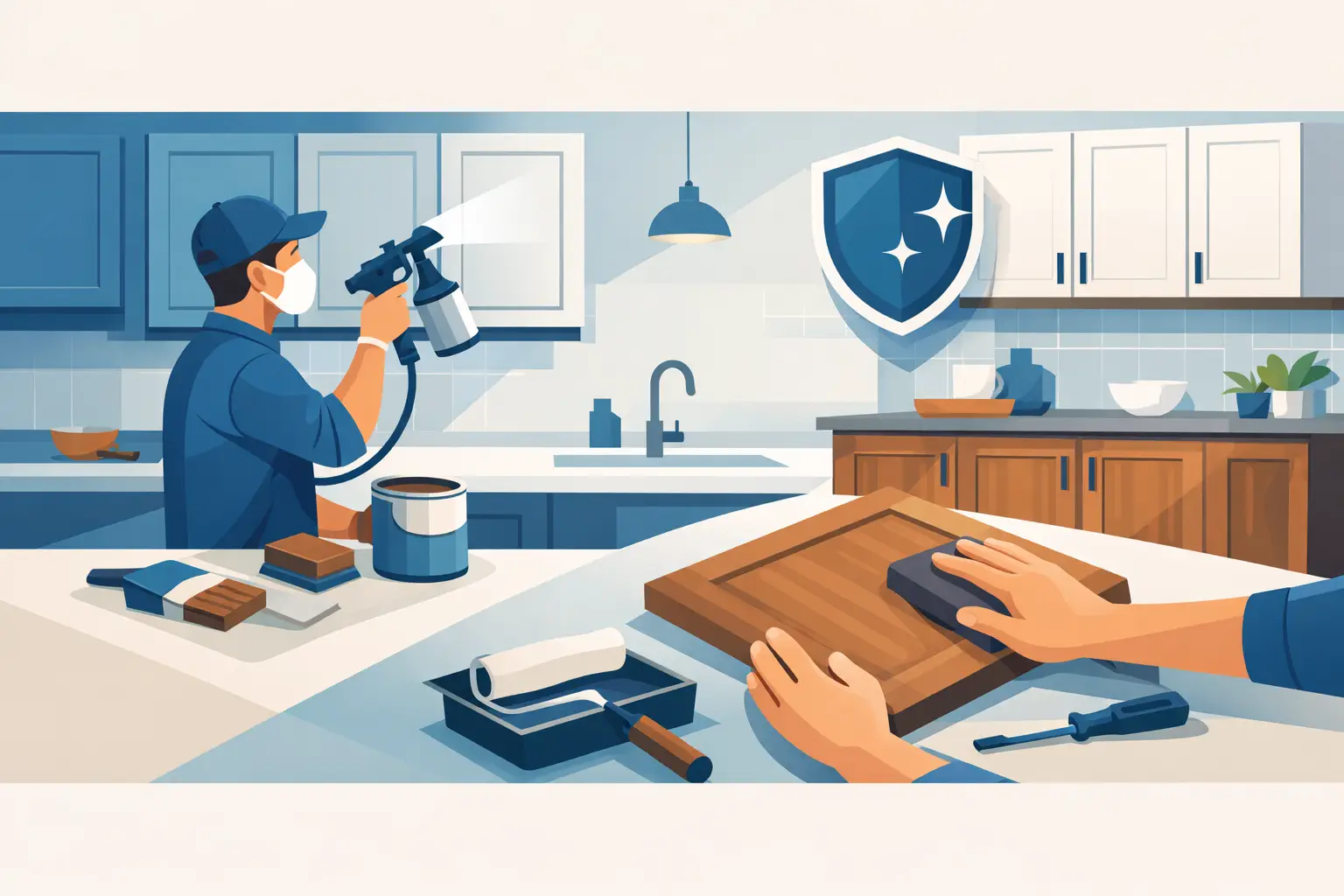
A kitchen can be structurally sound and still feel dated because its cabinets have yellowed, chipped, or lost their finish consistency. Professional cabinet refinishing services address that problem without the disruption, demolition, and replacement cost of a full kitchen renovation. The result should not look like a quick repaint. It should read as a deliberate, durable finish that holds together at close range and under changing light.
For homeowners in Toronto and the GTA, cabinet work is often part of a broader interior refresh. The best projects preserve good-quality cabinet boxes and doors while changing the visual weight of the room. That requires more than selecting a new color. It requires a controlled process, the right coating system, and careful management of the home while work is underway.
What Cabinet Refinishing Services Actually Include
Cabinet refinishing is a surface restoration and coating process. Depending on the existing cabinetry, it may involve cleaning, degreasing, sanding, repairing minor damage, priming, spraying finish coats, and reinstalling doors and hardware. The scope can also include filling outdated hardware holes, adjusting doors, and refinishing visible end panels, crown details, and toe kicks so the kitchen reads as one consistent installation.
The word "refinishing" is sometimes used loosely. A proper job is not simply paint applied over existing cabinet doors. Kitchen cabinetry collects airborne grease, cooking residue, hand oils, and cleaning-product buildup, especially around pulls, lower doors, and the range. If those contaminants are not removed and the surface is not mechanically prepared, even a premium topcoat can fail early.
The starting material matters. Solid wood, veneer, MDF, thermofoil, laminate, and previously painted cabinets each require different preparation and product decisions. A trade-professional contractor identifies the substrate before promising a result. For example, peeling thermofoil may need removal or replacement in affected areas before refinishing can proceed. Deeply damaged veneer may require repair that is visible in both price and outcome. Good process begins with an honest assessment of what can be restored well.
Why Preparation Determines the Finish
Cabinet doors are viewed much more closely than walls. A small nib in a sprayed finish, an uneven sheen level, or paint bridging around a profile can be obvious every time the kitchen is used. Meticulous prep is what separates a durable, factory-smooth result from a surface that looks acceptable on day one and tired six months later.
The work typically begins with a thorough clean and degrease, followed by sanding or abrasion to create a sound bonding surface. Small dents, open joints, and old hardware holes are repaired as needed. A compatible bonding primer is then applied, providing a stable base for the finish coats. Between coats, controlled sanding helps remove minor texture and keeps the final surface even.
Edges and door profiles require particular attention. They are the areas most likely to receive daily impact from rings, fingernails, bags, and cleaning. They are also where rushed application tends to show first. A reliable cabinet refinishing process treats these high-contact areas as finish-critical rather than incidental.
Spraying is usually the preferred application method for cabinet doors and drawer fronts because it produces an even film build with less brush texture. That does not mean every component can or should be sprayed in place. Fixed cabinet boxes, tight corners, and adjoining wall surfaces may require careful masking, hand-cut lines, and controlled brush or roller work. The method should follow the condition and geometry of the kitchen, not a one-size-fits-all routine.
The Difference Between Painting and Replacing Cabinets
Refinishing is often the right choice when the cabinet layout works, the boxes are solid, and the doors have a profile worth preserving. It can transform oak, maple, painted wood, or MDF cabinetry without changing countertops, plumbing, electrical, or flooring. The savings are meaningful, but the primary benefit is avoiding an unnecessary renovation when the kitchen's underlying structure is still serviceable.
Replacement is the better option when the layout is fundamentally inefficient, water damage has compromised cabinet boxes, or the homeowner wants a different door style, storage configuration, or appliance arrangement. Refinishing cannot correct warped cabinet construction, failing hinges throughout the kitchen, or a layout that no longer suits how the household uses the space.
There is also a middle ground. Some homeowners refinish existing cabinets, replace selected doors, update hardware, and add a new backsplash or countertop. This approach can deliver a substantial visual change while keeping the project focused. The key is coordinating finish decisions early. A warm white cabinet color can look entirely different beside cool quartz, aged brass hardware, or a gray-veined stone slab.
Choosing a Color and Sheen That Will Age Well
The most successful cabinet colors are selected in the actual kitchen, not under showroom lighting alone. Natural light, pot lights, under-cabinet lighting, flooring, wall color, and countertop undertones all affect how a finish reads. A white that appears clean in a sample can shift yellow, gray, or blue once it is installed across a full bank of doors.
For that reason, larger sample boards and on-site review are worth the time. In homes with open-concept layouts, cabinet color should also relate to adjoining millwork and wall finishes. Consistency does not mean every surface must match. It means the colors and sheen levels should feel intentional together.
A satin or low-sheen finish is often a practical choice for kitchen cabinetry. It provides a refined appearance, is easier to clean than a flat coating, and is generally more forgiving than high gloss. Higher sheens can look sharp in a contemporary kitchen, but they reveal more surface variation and require exceptional substrate preparation. The right sheen depends on the door style, lighting, and the level of visual precision the room demands.
What a Clean, Controlled Project Looks Like
Cabinet refinishing happens in one of the most used rooms in the house. A professional process must protect the home as carefully as it protects the finish. That means establishing work areas, masking adjacent surfaces, controlling dust, labeling doors and hardware, and maintaining an organized site throughout the project.
Door and drawer removal should be systematic. Components need to be labeled so reveals, hinge positions, and adjustments can be restored properly at reinstallation. Hardware should be handled with the same care. If new pulls or knobs are being added, hole placement should be measured consistently across every door and drawer front. Minor alignment errors become very noticeable in a finished kitchen.
Scheduling also matters. Coatings need appropriate dry and cure time, and the kitchen may not be fully usable at every stage. A dependable contractor explains the sequence before work begins, coordinates access with the homeowner, and keeps the site orderly at the end of each working day. Cleanliness is not an add-on to cabinet work. It is part of executing it properly in an occupied home.
Questions Worth Asking Before You Hire
Before choosing a contractor, ask what preparation is included, what coating system will be used, and whether doors will be sprayed or finished in place. Ask how the crew manages dust and overspray, how long the finish needs before normal use, and who is responsible for daily site supervision.
It is also reasonable to ask about insurance, workplace coverage, and experience with the specific cabinet material in your home. Cabinet refinishing is a specialized finish service. A low quote can omit the work that creates adhesion, consistency, and durability. Comparing scopes is more useful than comparing a single bottom-line number.
Whitmore Painting approaches cabinet projects with the same foreman-led standards used on premium interior work: clear preparation requirements, clean job sites, dependable scheduling, and finish quality that receives close inspection. The objective is not simply to change the color of the kitchen. It is to leave behind cabinetry that feels properly renewed.
A well-executed cabinet finish gives an existing kitchen another useful chapter without pretending it is a new installation. Start with an accurate assessment of the cabinetry, choose a color that works in the room's real light, and give preparation and curing the time they require. That is how refinished cabinets remain a considered improvement rather than a short-lived cosmetic fix.