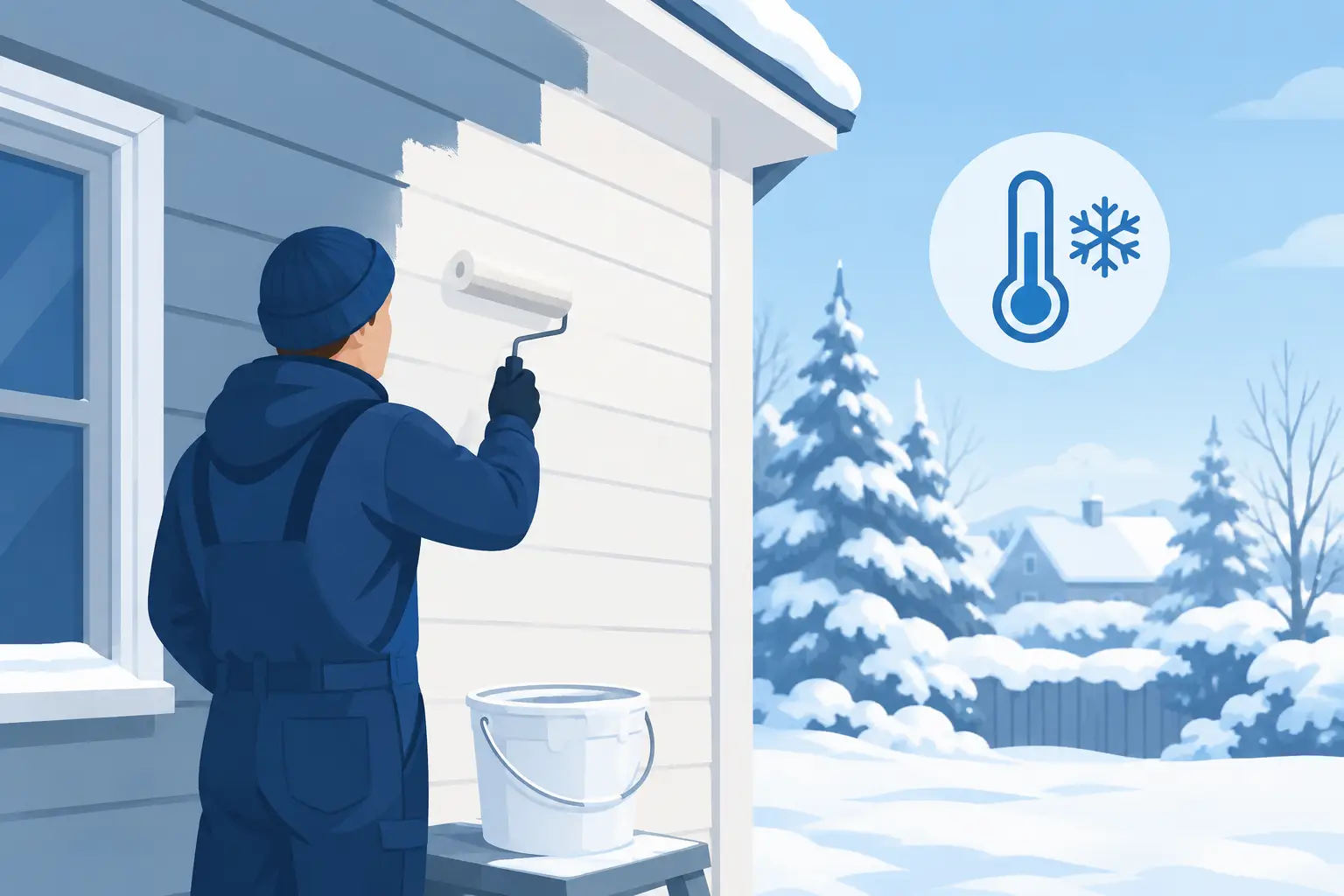
A newly painted wall can feel dry within hours, yet still be vulnerable to scuffs, moisture, and premature wear. That distinction matters when temperatures drop. So, does paint cure in winter? Yes, provided the coating and the surface stay within the manufacturer’s specified temperature range. The real question is whether conditions remain stable long enough for the paint film to form properly.
For homeowners planning an interior repaint or contractors coordinating a winter exterior schedule, cold-weather painting is less about the calendar than control. Temperature, relative humidity, airflow, surface temperature, and product selection all affect the final result.
Does Paint Cure in Winter?
Paint dries when water or solvents evaporate. It cures as the binders in the coating form a durable film that adheres to the surface and reaches its intended hardness. Those processes overlap, but they are not the same.
Most modern interior waterborne paints apply and dry well in conditioned spaces. If the room is held at a consistent temperature, typically above 50°F and preferably closer to normal occupied-room conditions, winter itself is not a problem. In a properly heated Toronto home, a high-quality interior finish can be applied year-round without compromising appearance or durability.
Exterior work requires more judgment. Air temperature may read within the acceptable range at midday while siding, trim, masonry, or metal remains colder after a long night. A surface that is cold, damp, or carrying condensation can interfere with adhesion even when the paint appears to dry. That is why a professional crew checks substrate conditions rather than relying on a forecast alone.
Cold Weather Slows More Than Drying Time
Lower temperatures slow evaporation and the chemical processes that allow paint to coalesce into a continuous film. A coat that normally becomes ready for recoating in a few hours may need significantly longer. If a second coat is applied too soon, moisture can become trapped between layers, creating a soft finish, uneven sheen, or reduced long-term adhesion.
Humidity adds another variable. Cold outdoor air holds less moisture, but winter job sites are not automatically dry. Rain, snowmelt, fog, condensation, and unvented construction heating can raise surface moisture. Indoors, closed windows and active humidifiers can also delay dry times, particularly in bathrooms, kitchens, and newly built homes where building materials are still releasing moisture.
Air movement must be measured, not improvised. Gentle ventilation can support drying indoors, but aggressive heat or direct airflow can cause a coating to skin over too quickly. That may leave the film underneath undercured or produce lap marks and inconsistent sheen. The objective is stable, even conditions across the room or exterior elevation.
Surface Temperature Is the Critical Reading
Air temperature is only part of the decision. Exterior substrates absorb and release heat at different rates. Dark siding may warm quickly in winter sun, while shaded trim, brick, concrete, and north-facing elevations can remain cold for much of the day. Once the sun moves, that surface temperature can fall quickly.
A paint film needs adequate time before it encounters temperatures below its minimum application range. The required window varies by product, substrate, and forecast. Premium low-temperature exterior coatings can extend the workable season, but they do not make wet, frozen, or unstable surfaces paint-ready.
For this reason, winter exterior work is often scheduled in shorter, carefully selected windows. The crew may focus on protected elevations, complete preparation ahead of the weather window, and stop application early enough to protect the coating overnight. Trade-ready scheduling is not simply arriving on a clear day. It is sequencing the work around the conditions that affect cure.
Interior Painting in Winter Can Produce Excellent Results
Winter is often an efficient season for interior repainting, cabinet refinishing, and new-construction painting. Homes are occupied and heated, exterior dust is reduced, and a controlled interior environment allows crews to maintain steady conditions. The key is not to treat every room as equally ready.
Before painting, the space should be brought to a stable temperature and allowed to normalize. Cold walls near exterior windows, poorly insulated additions, and rooms that have been vacant or minimally heated may require more time. Surface preparation still comes first: cleaning, repairing, sanding, priming where needed, and removing dust. A warm room cannot compensate for contaminants, failed caulk, glossy unscuffed surfaces, or inadequate patching.
Cabinets deserve additional care. A factory-smooth result depends on controlled preparation, appropriate primers, thin and even coats, and enough cure time before hardware is reinstalled or doors are put back into service. Cabinet finishes may feel dry quickly, but they should not be treated as fully hardened on the first day. Avoid heavy cleaning, tape, rubber bumpers, or stacking items against freshly finished surfaces until the coating has reached the manufacturer’s recommended cure period.
Keep Heat Consistent After the Crew Leaves
A common mistake is lowering the thermostat immediately after painting to save energy. The first several days are part of the finishing process. Large temperature swings can slow cure and increase the chance of marks or adhesion issues, especially on trim, doors, cabinetry, and high-contact walls.
Maintain normal indoor temperatures, avoid excessive humidity, and give the room reasonable ventilation. If you must move furniture back, leave clearance where possible and avoid pressing fabric, plastic, or protective pads against fresh paint. A careful handoff includes clear guidance on when the finish can be lightly used, cleaned, and fully loaded.
When Winter Painting Should Wait
There are times when postponing is the disciplined choice. Exterior painting should wait when rain, snow, frost, condensation, or rapidly falling temperatures are likely to affect the work. It should also wait when the substrate cannot be dried and stabilized, regardless of how pressing the schedule may be.
The same principle applies indoors. Painting in an unheated home, a renovation space with temporary heat, or a building with active moisture problems creates avoidable risk. Fresh drywall, plaster repairs, and woodwork must be sufficiently dry before coatings are applied. Painting over moisture does not solve the problem. It seals in a condition that can later show up as staining, blistering, peeling, or failed caulk lines.
For builders and general contractors, winter sequencing deserves early coordination. Mechanical commissioning, drywall completion, flooring installation, millwork delivery, and occupancy plans all influence the painting schedule. A foreman-led crew can protect finish quality only when the site is clean, temperature-controlled, and ready for each stage of prep, prime, and finish coats.
Product Choice Matters, but Prep Still Decides the Finish
Paint manufacturers formulate certain products for lower-temperature application, faster recoating, higher moisture tolerance, or durable interior use. Selecting the right system matters, particularly for winter exteriors and demanding surfaces. However, product labels are operating instructions, not shortcuts.
A premium coating cannot correct poor surface preparation or rushed conditions. Peeling paint must be removed to a sound edge. Bare substrates need the appropriate primer. Gaps need compatible caulk. Glossy surfaces need proper abrasion or bonding primer. On exterior projects, failed wood, open joints, and moisture pathways should be addressed before finish coats are considered.
The payoff is not only a finish that looks right on completion day. It is a coating system that holds its color, sheen, adhesion, and hand-cut lines through seasonal changes. In high-visibility rooms and detailed exterior trim, those standards are visible long after the ladders and protection have been removed.
Winter does not prevent a successful paint project. It demands better control of the variables that summer can sometimes hide. If the environment is stable, the surface is properly prepared, and the coating is given its full curing window, the result can be every bit as durable and refined as work completed in warmer weather.