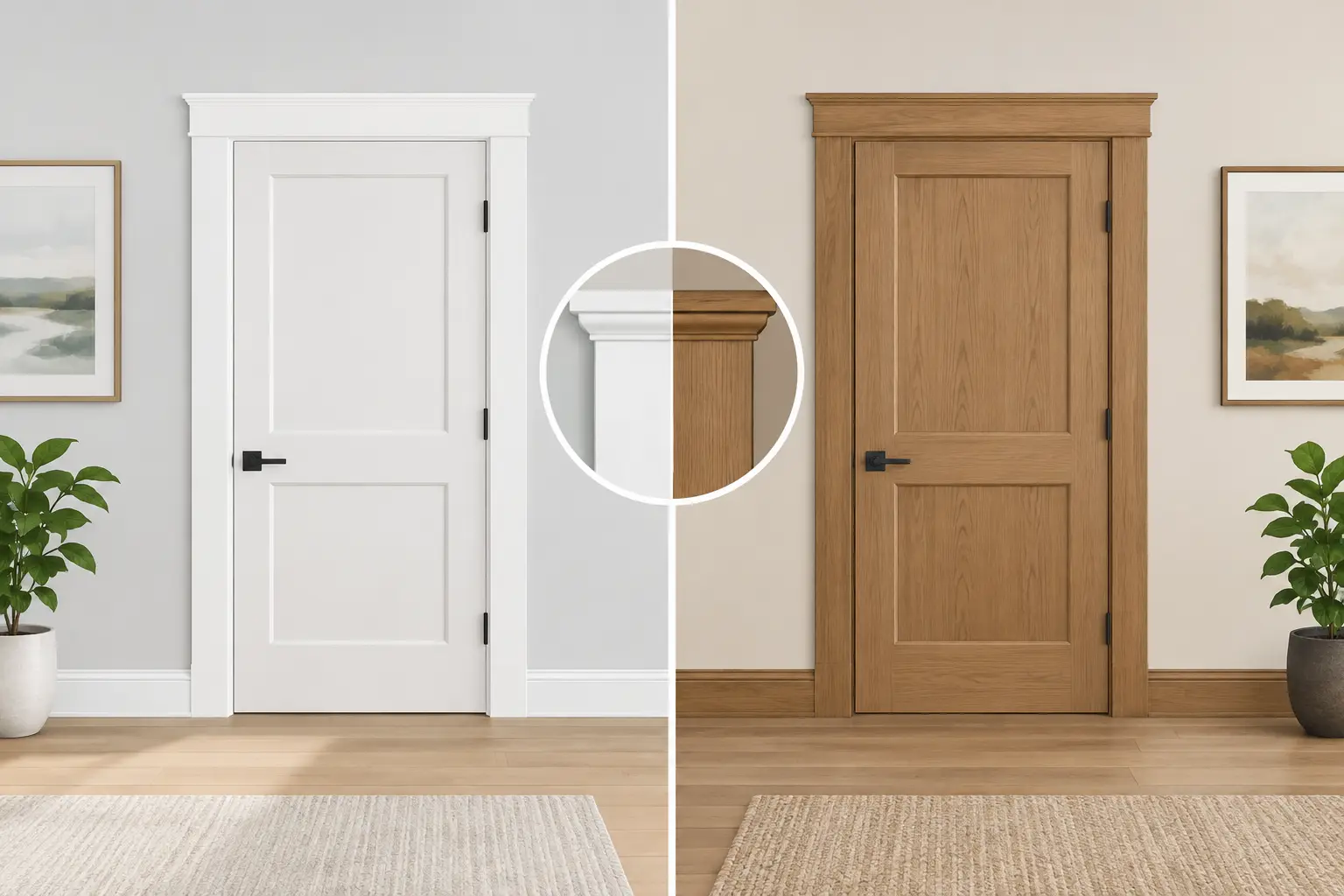
A room can have excellent floors, well-chosen wall color, and quality furnishings, then still feel unfinished because the trim does not belong. The decision between painted trim versus stained trim is not a minor finishing detail. It affects how light moves through the room, how architectural details read, how easily surfaces can be maintained, and whether the home feels current or overly busy.
For a premium interior, the right choice is usually less about following a trend and more about respecting the home’s architecture, the condition of the existing woodwork, and the standard of finish required. Both approaches can be excellent. Both can also look disappointing when the preparation, materials, or application method falls short.
Painted Trim Versus Stained Trim: The Core Difference
Painted trim creates a clean, uniform frame around a room. It can make baseboards, casing, crown molding, doors, and built-ins feel more deliberate, particularly when the millwork has profile, scale, or decorative detail. Paint conceals variation in the substrate and gives a consistent appearance across repaired, new, and existing pieces.
Stained trim does the opposite. It celebrates the wood itself: grain direction, species, color variation, and joinery. When the material is high quality and consistent, stained wood introduces depth and warmth that paint cannot replicate. It is especially effective in homes with natural hardwood floors, exposed beams, paneled libraries, or architectural styles where woodwork is central to the design.
The distinction is straightforward, but the decision is not. A painted finish may be the better design choice even in a traditional home. A stained finish may be the right call in a contemporary space if the wood is exceptional and the palette needs warmth.
When Painted Trim Is the Better Choice
Painted trim is generally the more flexible option. It works with nearly any wall color, and it can be updated later without stripping a clear coat or trying to match an aged stain. In homes with a mix of original millwork, additions, repairs, and replacement doors, paint brings those elements into one visual system.
It is also the practical choice when the existing woodwork is not furniture-grade. Old trim often carries nail holes, patching, uneven grain, water marks, minor damage, or different wood species from past renovations. Stain does not hide those inconsistencies. In many cases, it makes them more visible. Meticulous prep can produce a very refined painted finish, while the same substrate may never deliver a convincing stained result.
White remains a common choice, but it is not the only one. Soft off-whites can reduce the sharp contrast against warmer walls. Deep charcoal, navy, or black trim can give formal rooms more definition. Matching trim to the wall color, in a different sheen, creates a quieter architectural effect. The key is consistency. Color, sheen, and hand-cut lines should be considered across the entire room, not selected one casing at a time.
Finish quality matters more than the paint color
Painted trim is judged at close range. Brush marks, open joints, flashing, paint buildup in corners, and rough caulk lines are immediately visible on doors and casing. A high-end result depends on cleaning, sanding, filling, caulking, priming where required, and controlling dust before finish coats are applied.
For trim, sheen also needs careful consideration. Satin is commonly used for a lower-luster, contemporary look. Semi-gloss provides more reflectivity and is easier to wipe down, but it also exposes surface defects more readily. Neither is universally better. The profile of the millwork, natural light, and the condition of the substrate should guide the choice.
When Stained Trim Is Worth Preserving or Adding
Stained trim earns its place when the wood has character worth seeing. Clear oak, maple, walnut, cherry, mahogany, and well-selected fir can bring a level of material richness that painted MDF or standard painted poplar cannot provide. In the right setting, stained trim can make a home feel established, grounded, and carefully built.
It is often strongest in rooms where the woodwork is substantial: formal dining rooms, studies, stair halls, great rooms, and homes with original paneling or detailed doors. A clear or lightly toned finish can also work well in restrained modern interiors, where pale white oak millwork adds warmth without visual clutter.
The challenge is matching. Stained trim is less forgiving when new work meets old. Wood species, grain pattern, stain absorption, finish age, and exposure to sunlight all affect color. Even boards from the same species can take stain differently. A sample that looks correct under shop lighting may read too red, too gray, or too dark when installed beside existing flooring or cabinetry.
Stain requires a higher standard of material selection
A stain finish cannot correct poor lumber selection. If the boards contain inconsistent grain, knots, sapwood, mineral streaks, or mismatched pieces, those features become part of the final appearance. That may be desirable in a rustic setting, but not in a formal interior where the goal is controlled consistency.
The finishing process is equally exacting. Wood may need conditioning to limit blotching, particularly with softwoods and maple. Color samples should be approved on the actual species and preferably under the room’s daytime and evening lighting. The clear coat must be applied evenly, with proper sanding between coats where the system calls for it. A cloudy, uneven, or overly glossy topcoat can undermine otherwise beautiful woodwork.
Consider the Room Before Choosing the Finish
The same trim strategy does not need to run through every room. A home can use painted trim in bedrooms and hallways while retaining stained paneling or a stained staircase in a more formal central area. The transition simply needs to be intentional. Repeating a wood tone in flooring, a handrail, beams, or furniture can help stained trim feel connected rather than isolated.
Light is another deciding factor. Painted trim reflects more light, particularly in white or pale colors, and can help smaller rooms feel cleaner and more open. Dark stained trim absorbs light and creates contrast. That can be dramatic in a large, well-lit room, but may feel heavy in a narrow hall or low-ceiling basement.
Also consider the visual workload already present in the space. If flooring has strong grain, cabinetry is wood, and furniture includes several wood tones, painted trim can provide necessary relief. If the room is mostly plaster, stone, painted walls, and upholstery, stained trim may supply the warmth and texture it lacks.
Maintenance, Repairs, and Long-Term Flexibility
Painted trim is easier to touch up when the original paint and sheen are known. It can still show scuffs, particularly around doors, stairways, and baseboards, but isolated repairs are usually manageable. The risk is visible patching when touch-ups are applied over aged or yellowed paint without repainting the full section.
Stained trim often hides minor marks better because the grain breaks up the surface visually. However, deeper scratches, dents, water damage, or UV fading can be more complicated to repair. Spot repairs may alter the color or sheen, and blending a new stain into old wood takes skill.
For families with active children, pets, or frequent entertaining, durability should be evaluated by location rather than by a broad rule. Door casings and handrails receive more contact than crown molding. A well-specified coating system and thorough surface preparation will have a greater effect on wear than the paint-versus-stain decision alone.
A Note on Existing Orange or Dark Wood Trim
Many homeowners are not choosing between two new finishes. They are deciding whether to paint existing honey oak, dark mahogany, or orange-toned varnished trim. This is where a design-led assessment is useful.
If the existing wood is original, substantial, and consistent throughout the home, preserving it may protect architectural value. If it is thin builder-grade trim, heavily patched, inconsistent, or limiting a broader renovation, painting may bring the interior forward significantly. The answer should not be based on a blanket rule that all wood trim is dated or that all painted trim is more modern.
Painting previously stained trim requires disciplined preparation. Glossy clear coats must be cleaned and deglossed or sanded, adhesion-promoting primers may be needed, gaps should be addressed, and the finish coats must be applied evenly. Skipping those steps can lead to peeling, visible tannin bleed, or an uneven sheen that appears under changing light.
Make the Decision at Full-Room Scale
Before committing, look beyond a single sample board. View painted and stained options beside the flooring, wall color, hardware, cabinetry, and upholstery. Assess them in daylight and under evening lamps. What feels understated at noon can feel stark or overly dark after sunset.
For projects where the trim runs through multiple rooms, establish the finish standard early. Whitmore Painting approaches this work with sample approval, meticulous prep, and foreman-led coordination so the final finish reads consistently from room to room.
The best trim choice is the one that makes the architecture feel resolved. If the wood deserves to be seen, stain it with care. If the room needs clarity, continuity, and a factory-smooth painted finish, paint it properly. Either route can add lasting value when the material, preparation, and execution are treated as part of the design rather than an afterthought.