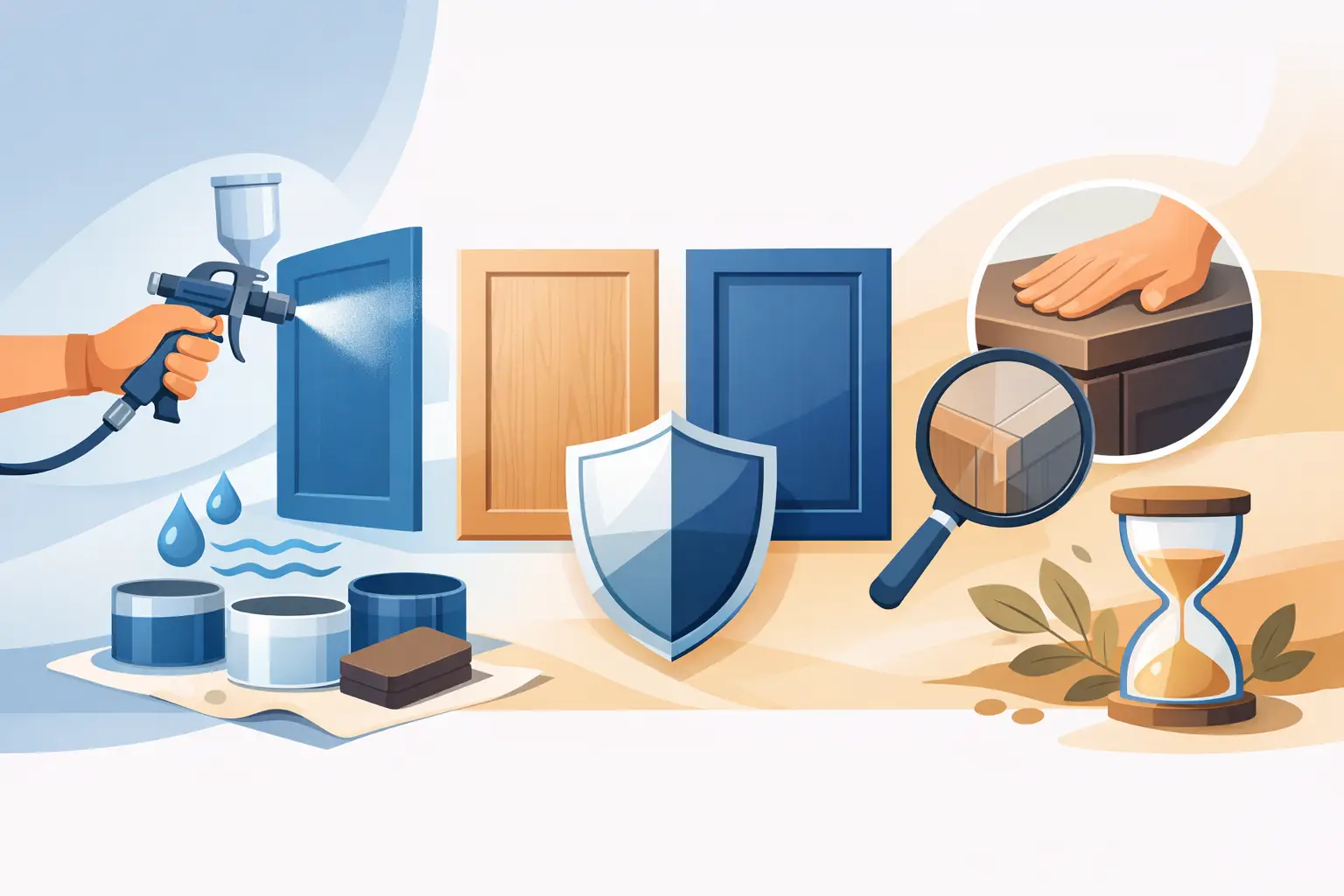
A kitchen can look newly built after cabinet refinishing, but appearance on day one is not the real test. Homeowners asking, “is cabinet refinishing durable,” are usually weighing a meaningful investment against the daily reality of fingerprints, steam, cooking grease, chair impacts, and busy family routines. The answer is yes, provided the existing cabinets are sound and the work follows a professional coating process rather than a quick cosmetic repaint.
A durable cabinet finish is not created by the topcoat alone. It depends on the condition of the doors and boxes, meticulous prep, compatible primers and coatings, controlled application, and sufficient curing time before the kitchen returns to full use. Miss one of those steps and even premium paint can chip, peel, or wear prematurely.
Is Cabinet Refinishing Durable in a Working Kitchen?
Properly refinished cabinets can hold up for many years in an active kitchen. A well-executed finish commonly performs for seven to 10 years before a homeowner may want touch-ups or a refresh, and it can last longer with reasonable care. That does not mean the surface is indestructible. Any painted finish can be damaged by repeated impact, standing water, aggressive cleaners, or hardware that rubs against doors.
The more useful comparison is not painted cabinets versus an imaginary flawless surface. It is professional refinishing versus replacement, low-grade factory finishes, or a rushed paint job. A cabinet-grade coating system, applied correctly, creates a hard, washable finish that is appropriate for everyday residential use. It is especially effective on solid wood, MDF, and previously painted doors that remain structurally stable.
Durability becomes less certain when cabinets have swollen particleboard, separating veneer, extensive water damage under the sink, failing thermofoil, or warped doors. Paint can improve the look of those materials, but it cannot restore their structural integrity. In those cases, replacing selected doors or cabinets may be the more responsible investment.
What Actually Makes a Cabinet Finish Last
Cabinet painting is a surface-preparation project before it is a painting project. Kitchen cabinetry collects contaminants that wall paint rarely encounters: oils from cooking, hand lotion, cleaning residue, and silicone-based polishes. If those contaminants remain on the surface, they interfere with adhesion.
A durable process begins with thorough cleaning and degreasing, followed by sanding or mechanical abrasion to create a reliable profile for the primer. Areas with dents, open joints, or previous finish failure should be repaired before coating begins. Doors, drawer fronts, and fixed cabinet components also need separate attention. The goal is consistent adhesion across every surface, not simply a uniform color.
Primer matters because it acts as the bond between the existing substrate and the finish coats. Bare wood, stained cabinetry, laminate, and previously painted doors do not all accept the same primer system. A quality contractor selects products based on the material and the condition of the existing finish, then uses a cabinet-grade enamel or coating designed to cure hard and remain cleanable.
Application method also changes the result. Brush and roller application can be appropriate for some built-in elements or smaller repairs, but doors and drawer fronts benefit from controlled spraying when site conditions allow. Proper spraying produces an even film build and a factory-smooth result without heavy texture. That finish is not just more polished visually. A smooth, properly cured surface is easier to wipe clean and less likely to trap grime along roller stipple.
Prep and Curing Matter More Than Paint Brand
Premium coatings are worth using, but no paint brand can compensate for poor preparation or rushed scheduling. The common causes of cabinet failure are predictable: inadequate cleaning, skipped sanding, incompatible products, excessively heavy coats, and reassembly before the coating has cured.
Paint can feel dry within hours, yet still be vulnerable beneath the surface. Cabinet doors should be handled carefully during reinstallation, and homeowners should avoid hard use while the coating reaches its full cure. That means no slamming doors, no scrubbing with abrasive pads, and no placing damp towels over freshly coated surfaces. The exact curing window varies by product and conditions, but the first few weeks are the period that most affects long-term performance.
Humidity and temperature also matter. A disciplined contractor plans cabinet work around suitable conditions and maintains a clean, organized work area to reduce dust, overspray, and contamination. This is one reason cabinet refinishing should not be treated like a weekend wall-painting project. The finish system needs control at every stage.
How Long Do Refinished Cabinets Last?
Longevity depends on the kitchen, not just the coating. Cabinets in a lightly used condo kitchen may remain in excellent condition for a decade or more. In a large family kitchen where doors are opened constantly, cabinets around the sink, garbage pullout, dishwasher, and range will show wear first.
Dark colors can reveal dust, grease, and small scratches more readily. Very light colors are generally forgiving, though white cabinets can show discoloration if they are exposed to smoke, cooking residue, or inconsistent cleaning practices. High-touch areas deserve practical expectations. The edge of a trash pullout or the cabinet below a sink will always face more abuse than an upper door.
Hardware affects durability as well. Hinges that are out of adjustment can cause doors to rub. Handles that are loose can allow oils and moisture to collect around screw holes. Soft-close hardware, properly aligned doors, and bumpers that prevent door-to-door contact all reduce unnecessary wear on the finish.
Refinishing vs. Refacing vs. Replacing Cabinets
Refinishing is often the strongest value when the cabinet layout works, the boxes are in good condition, and the goal is a major visual change without the disruption of a full renovation. It preserves usable cabinetry while allowing homeowners to update an outdated stain, yellowed paint, or mismatched design direction.
Refacing is more appropriate when cabinet boxes are sound but the doors are dated, damaged, or not worth refinishing. It changes the visible door and drawer-front components while keeping much of the existing installation. Replacement becomes the better choice when the kitchen needs a new layout, improved storage, structural repairs, or substantial plumbing and electrical changes.
The durable choice is not automatically the most expensive one. It is the option that matches the condition of the kitchen. Refinishing a stable, well-built cabinet is a practical long-term decision. Coating failing thermofoil or water-damaged particleboard simply to avoid replacement may produce a short-lived improvement.
Protecting a Refinished Cabinet Finish
Once the cabinets are cured, care is straightforward. Use a soft microfiber cloth with mild soap and water for ordinary cleaning, then dry the surface rather than leaving moisture around edges and joints. Avoid scouring pads, powdered cleaners, strong solvents, and harsh degreasers unless the coating manufacturer specifically permits them.
Address drips under the sink promptly, particularly around the cabinet floor, toe kick, and door edges. Use handles or pulls instead of opening doors by their painted edges. If an impact causes a chip, repair it early before repeated cleaning or moisture reaches the substrate.
A professional cabinet project should also include a clear discussion of what is being coated, what condition the cabinets are in, and where normal wear is most likely to appear. At Whitmore Painting, that evaluation is part of setting a finish standard that is realistic for the home, not just attractive for the handover photo.
Cabinet refinishing is durable when it is treated as a coating system with disciplined prep, correct materials, and proper cure time. If your existing cabinets are structurally sound, a high-end refinishing project can give the kitchen a lasting finish without the cost, disruption, and waste of a full replacement.