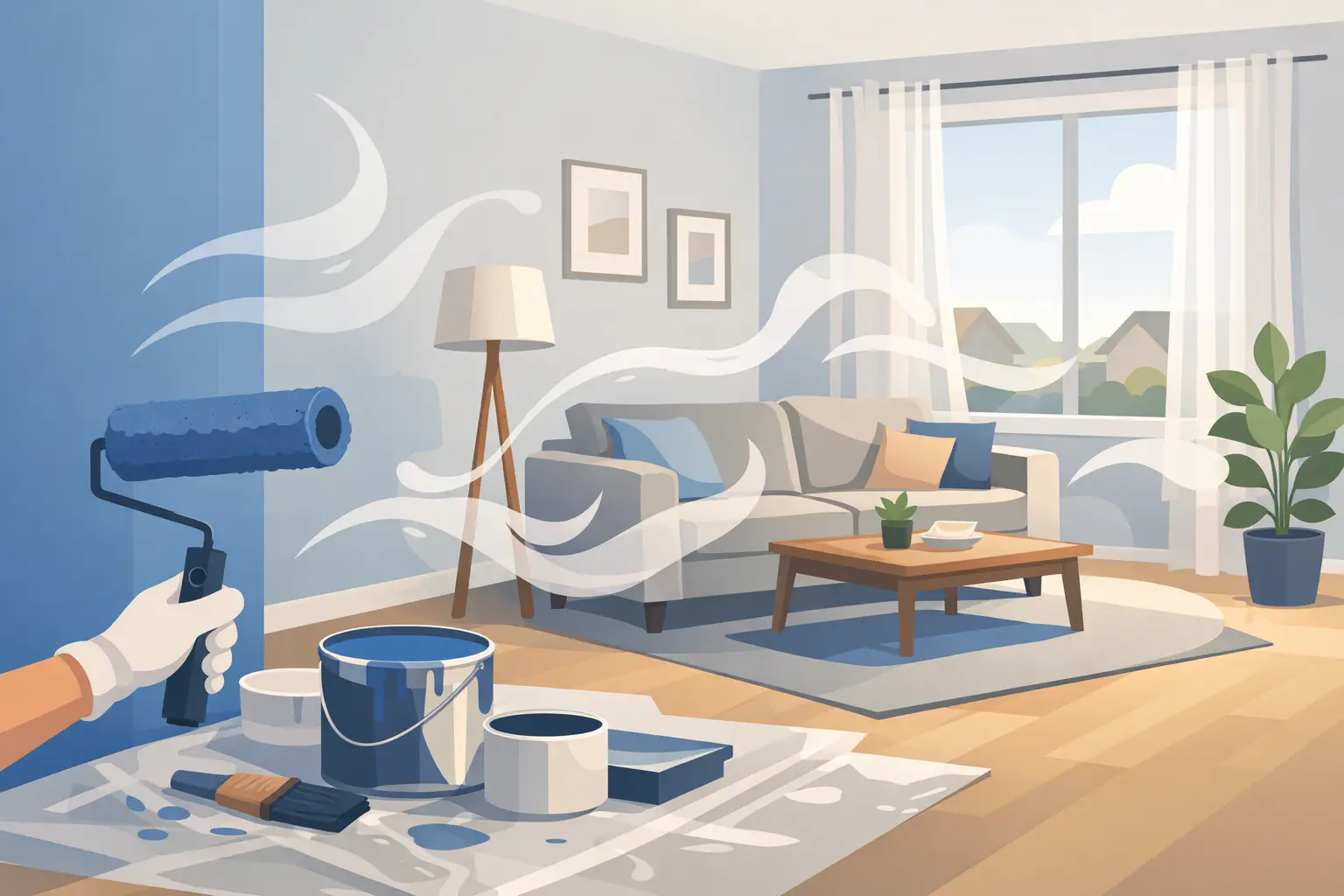
A freshly painted room should look finished, not feel off-limits. Yet paint odour can linger long after the crew has cleaned up, making a bedroom, nursery, office, or main living area uncomfortable to use. The right response is not simply opening a window and hoping for the best. Odor is affected by the coating system, the condition of the surfaces, air movement, temperature, humidity, and the way the work was planned.
For homeowners, this matters because a premium paint project needs to fit real life. Rooms may need to be occupied quickly, furniture may need to return on schedule, and a clean finish should not come with days of avoidable disruption.
What Causes Paint Odour?
Most paint odor comes from volatile compounds released as paint dries and cures. These compounds evaporate into the air during and after application. The intensity and duration depend on the product, but also on the amount of material applied and the ventilation available to carry those compounds out of the room.
Water-based interior paints generally have a lower odor profile than traditional oil-based coatings. That does not mean every water-based product is odor-free, or that every low-VOC label produces the same experience. Premium interior paints vary in resin chemistry, tinting systems, sheen, and drying behavior. Deep colors and certain specialty coatings can also have a more noticeable smell than a standard white wall paint.
Oil-based primers, alkyd enamels, shellac-based stain blockers, and some solvent-borne specialty products typically produce a stronger odor. They are sometimes the correct technical choice. A water stain bleeding through a ceiling, heavy smoke damage, tannin-rich wood, or a cabinet refinish may require a higher-performance primer or enamel system. The trade-off is that the room may need more deliberate ventilation and a longer return-to-service window.
Odor is also not always a paint problem. Damp drywall, mildew, pet contamination, smoke residue, or an improperly sealed previous finish can release odors once a room is closed up for painting. Good diagnosis before coating is part of meticulous prep. Paint should not be used to conceal a moisture or contamination issue that needs to be corrected at the source.
How Long Does Paint Odour Last?
For a typical interior repaint using quality water-based paint, the strongest paint odour is usually gone within 24 to 72 hours when the room is ventilated properly. A faint smell can remain for several days, particularly in closed rooms, during humid weather, or where several coats have been applied over a large area.
The curing period is longer than the drying period. Paint may be dry to the touch in a few hours and ready for a second coat the same day, but the coating continues to harden and release residual compounds as it cures. This is one reason a room can feel usable before cabinets, trim, doors, or walls are ready for hard cleaning or heavy contact.
With oil-based or specialty coatings, noticeable odor may last a week or longer. Cabinets are a common example. A factory-smooth cabinet finish often involves primers and durable enamels selected for adhesion and wear resistance, not only for low odor. The best approach is to plan the work so the kitchen can be ventilated and, where possible, temporarily separated from primary living areas.
Temperature and humidity change the timeline. Paint applied in a cool, humid home dries and cures more slowly. In winter, Toronto-area homes are often sealed tightly, and opening windows may not be practical for extended periods. Mechanical ventilation, air exchange, and controlled indoor conditions become more valuable than relying on weather alone.
Low-VOC Paint Is Helpful, But It Is Not the Whole Plan
Low-VOC and zero-VOC products can reduce odor and are often a sensible choice for occupied homes, especially bedrooms, nurseries, and spaces used by people with sensitivities. However, a label should not replace product knowledge or job-site discipline.
Colorants added at the store can affect a product's final VOC level. More importantly, the paint itself is only one material in the room. Primers, caulking, patching compounds, cleaners, and sealers may each contribute their own odor. A professional coating plan considers the complete system, including which primer is necessary, whether a stain-blocking product is required, and whether a durable trim or cabinet coating is appropriate.
There can be a genuine trade-off between immediate comfort and long-term performance. Choosing the lowest-odor product available is not always the correct decision if it compromises stain blocking, adhesion, washability, or the finish expected in a high-use space. The better standard is to select compatible, premium products for the conditions, then manage ventilation and scheduling properly.
How to Clear Paint Odour Safely
Ventilation works best when it creates an intentional path for air to move through the room. Opening one window helps, but cross-ventilation is more effective. When conditions allow, open windows on opposite sides of the home or room and use a fan to direct indoor air outward. Avoid pointing a fan directly at fresh paint during application, as excessive airflow can affect drying and introduce dust into the finish.
After the final coat has had appropriate dry time, keep interior doors open where practical and run the home's ventilation system according to its design. A portable air purifier with a substantial activated-carbon filter can help with odor, while a HEPA filter is useful for particles but does not remove gases on its own. Avoid masking the smell with candles, heavy fragrances, or aerosol sprays. They add more compounds to the air and make it harder to tell whether the original odor is clearing.
If a room must be occupied quickly, prioritize the spaces that matter most. Paint bedrooms or a nursery first, allow them to air out, and schedule adjacent spaces afterward. For larger projects, a phased plan keeps a portion of the home functional while allowing freshly painted areas adequate ventilation and cure time.
The following conditions deserve extra care:
- Young children, older adults, pets, and people with respiratory sensitivities may need more time away from freshly coated rooms.
- Rooms with limited windows, such as interior bathrooms, stairwells, and basements, require a stronger mechanical ventilation plan.
- Cabinet refinishing, stain blocking, and heavy repair work may involve products with longer odor and cure timelines.
- Persistent odor accompanied by headaches, dizziness, breathing discomfort, or eye irritation warrants leaving the area and seeking appropriate medical guidance.
The Job-Site Practices That Prevent Lingering Odor
Paint odor is easier to manage when the project is organized before the first wall is rolled. Furniture protection, containment, surface cleaning, repairs, primer selection, and a clear coating sequence all affect how smoothly the work proceeds. Rushed preparation often creates unnecessary delays, extra coats, or last-minute product changes that extend the time a home is disrupted.
A foreman-led project also provides a clear point of responsibility for practical details: confirming ventilation options, isolating a work area, coordinating access, and identifying rooms that need to return to use first. This is particularly important in occupied homes, where a technically sound paint application must also be clean, controlled, and considerate of the household's schedule.
For homeowners planning a repaint, ask what paint and primer system will be used, whether any solvent-borne products are anticipated, and when each room can realistically be occupied. A dependable contractor will give a direct answer rather than treating odor as an afterthought.
Fresh paint should settle into the background quickly. With the right products, careful prep, and a ventilation plan suited to the home, the lasting impression is the finish - clean lines, consistent color, and rooms ready to live in.